Русский
 Հայերեն
 Français
“Komitas: Pain and Memory”
“As simple and unpretentious as Mount Ararat, he is noble and majestic; in his spiritual realm, he soars toward the heavens. His seed sprouted from the heart of the people, blossomed from their spirit, and was adorned with their emotions. Only he is as great and eternal as Ararat. A crown woven from sounds rests upon his brow. He symbolizes the Armenian spirit, just as Ararat symbolizes the Armenian homeland. Komitas…”
Tsitsilia Brutyan
There are great figures whose portrait is beyond the ability of even the most gifted artist or the most talented writer to fully capture. Komitas is one such figure—the Mesrop Mashtots of Armenian song, who was consumed by the very fire he himself kindled and left an undying warmth within Armenian culture. The sublime language of Komitas’s pure music is the source from which Armenian music originates and spreads.
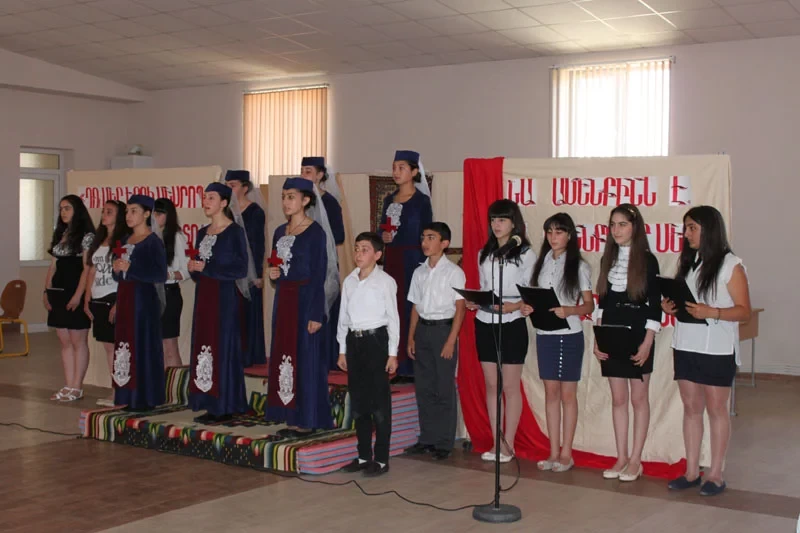
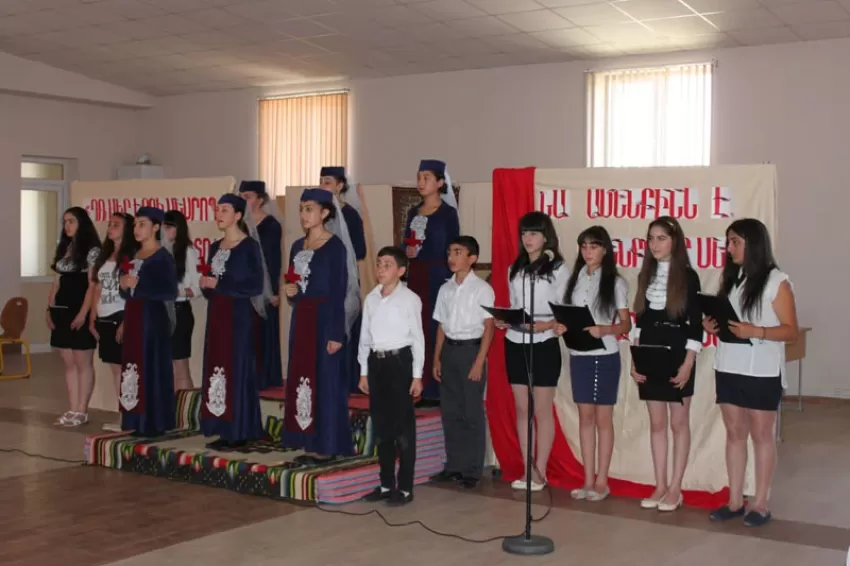
A vivid testament to this was the memorial evening entitled “Komitas: Pain and Memory,” held on July 11 at the “Ընտանիք” Children and Youth Creative Center.
The aim of the event was to present the difficult path traversed by the Armenian people through the life of Komitas, with its tragic hardships and sorrowful ending; to instill in the students an unwavering will to survive and a sense of pride in the world-renowned culture and centuries-old history of their homeland.
With delicate and vibrant imagery, the students portrayed the industrious and creative spirit of the Armenian people, their tireless devotion to their native land, the magnificent nature of their homeland, its fields and mountains, clouds and rain, as well as people’s thoughts and emotions through a variety of expressive forms and shades.
Intoxicated by songs of joy and sorrow and enchanted by the sweet melodies of folk music, the audience was immersed in a lyrical and soul-stirring atmosphere.
The students’ words were simple, but this simplicity did not arise from a lack of thought or emotion. Rather, it stemmed from crystalline purity and clarity of thought, born of the complete harmony between experience and reflection. Those deeply moving and captivating poetic lines were among the most eloquent testimonies to the genius’s tragedy—the pages of one of the most terrible tragedies, one that was not personal, because it belonged to the entire Armenian people.
Thanks to the painstaking work of Sona Sahakyan and Gayane Minasyan, this deeply educational event came to life. Its enchanting and captivating melodies reached the hearts of both the audience and the students, allowing them to become part of Komitas’s “ever-resounding, ever-vigilant, unceasing bell tower.”
Seda Hakobyan