Русский
 Հայերեն
 Français
Radio Electronics
Learners' age group: 10 to 18 years old Number of learners: Not less than 8 learners Class load: 6 to 8 class periods per week Duration of study: Three years
CONTENTS
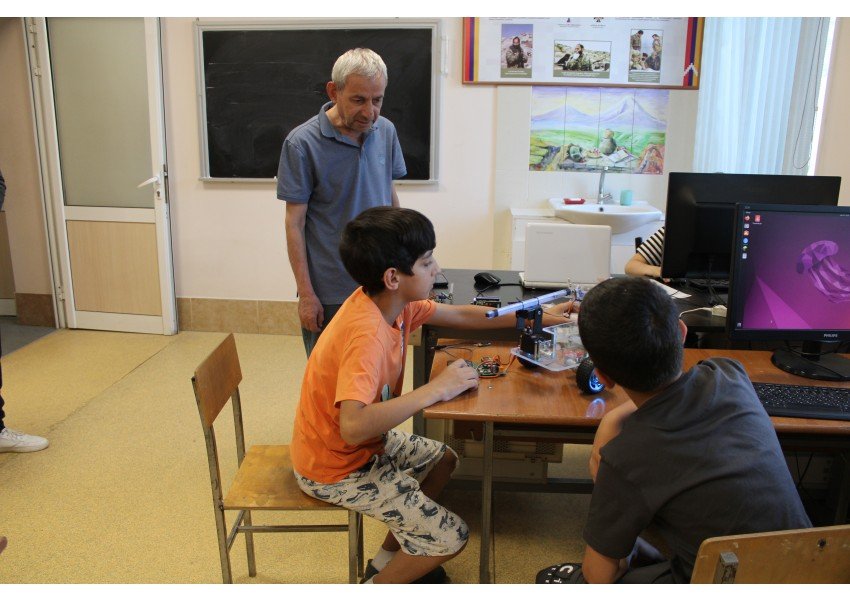
In the radio electronics club, students learn the elements of radio electronics: assembling and preparing circuits, and using blueprints and conventional symbols. Club students will become acquainted with the constructive features of robots, the operational capabilities of robots, and programming robots through software packages and the Python programming language. They will learn robot operating programs, graphical interfaces for interacting with robots, and how to perform multiple actions simultaneously and execute parallel programming. By programming various robots, students will acquire a vast pool of knowledge, excellent skills in working with radio-technical constructors, and will manifest themselves as young master engineers. During the program, students' intellectual abilities and personal capabilities will be revealed. They will be taught: abilities and skills in working with radio-electronic equipment, programming capabilities in compliance with modern requirements, and skills in using applications and platforms necessary to control virtual-real executors.
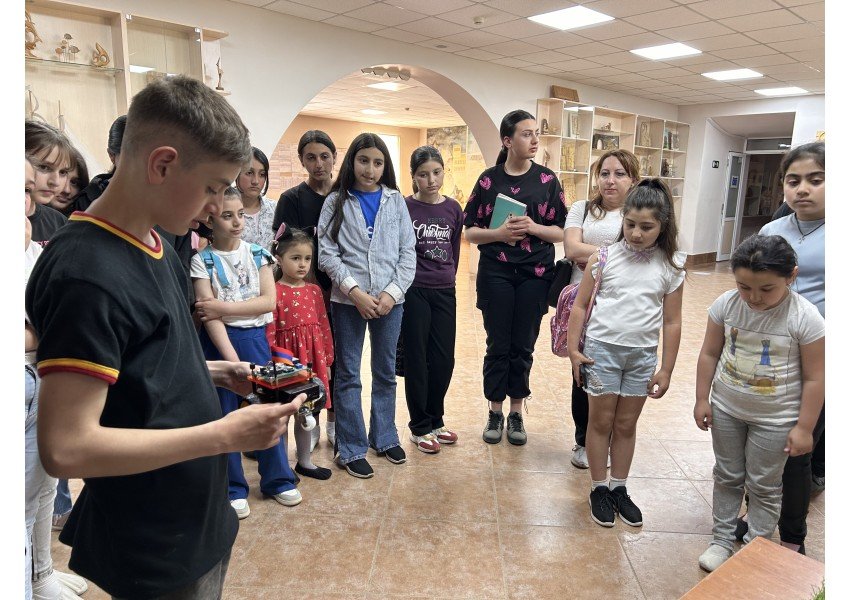
Club students will be given the opportunity to participate in republican and international competitions, and will receive proper pre-professional orientation.
FORMS OF INSTRUCTION
The educational process is carried out through a combination of theoretical and practical classes. An individual approach is to be shown to newly admitted students within the group classes. The course emphasizes the organization of educational work, reading, conducting conversations, watching thematic programs, organizing exhibitions, and transferring professional knowledge to peers.
EXPECTED OUTCOMES
Within the framework of the program, learners must:
-
Master skills in correctly using technical drawings and conventional symbols,
-
Detect and eliminate equipment malfunctions,
-
Know the stages of carrying out the radio electronics process,
-
Be able to read electronic schematics, perform drawings, and use datasheets,
-
Differentiate the assemblies of radio elements,
-
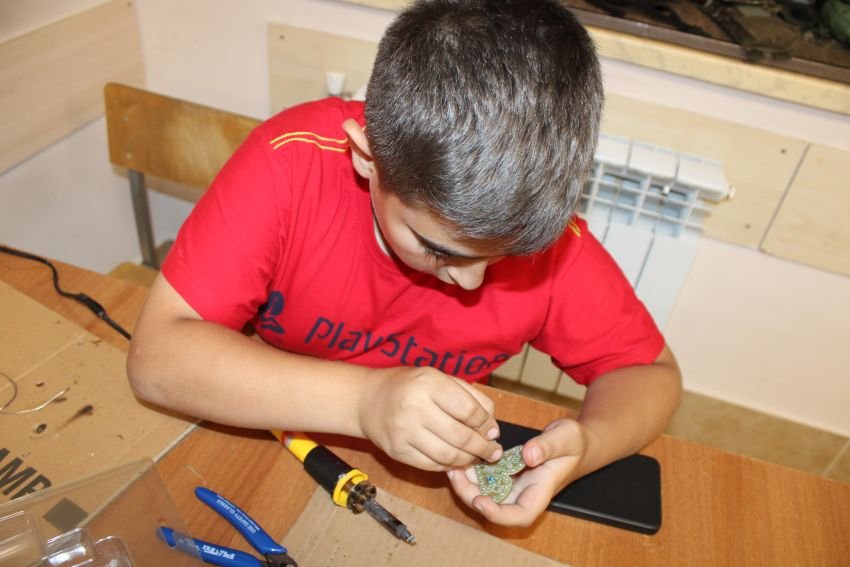
Master the stages of equipment soldering and adjustment,
-
Observe safety rules,
-
Be able to build robots that perform various functions,
-
Know what coding, algorithms, systems, programming, and business communication are,
-
Recognize computer components and their operational principles,
-
Communicate in technical language, present completed work, and solve open-ended problems.