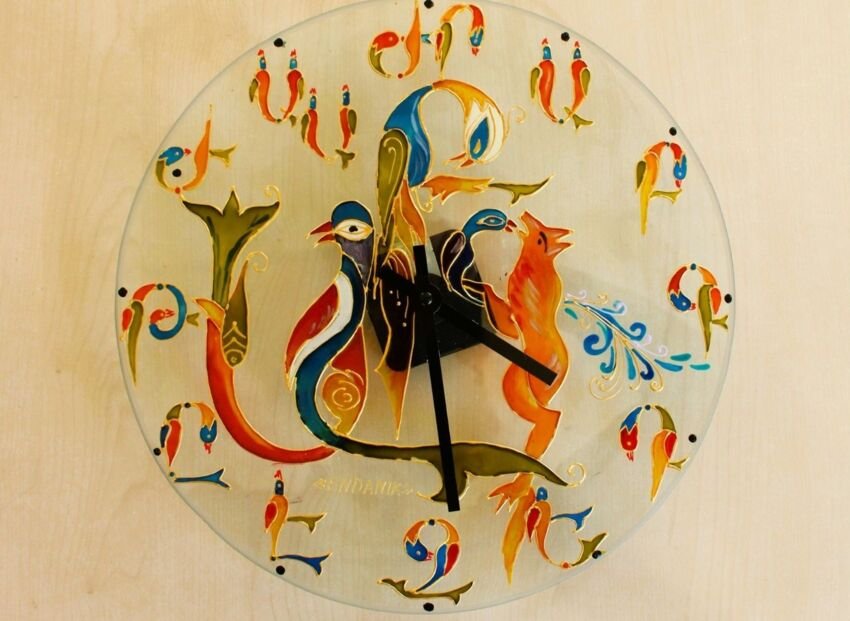
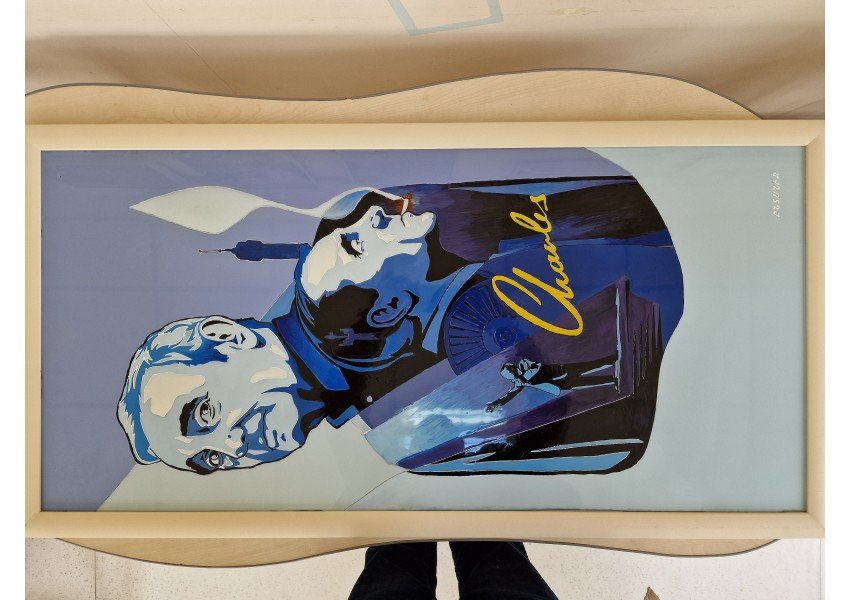
Stained glass art is a form of decorative and applied art.
Students attending the program become familiar with safety regulations and study the fundamentals of drawing and painting. They learn to apply the principles of perspective, compositional and spatial planning, light and shadow, as well as the principles of color harmony and color combinations.
Through practical exercises, students learn how to transfer a sketch onto glass and outline the planned image or design using appropriate contouring materials. They select a suitable palette of stained-glass paints and, using brushes, fill the outlined sections with color, bringing the work to its final artistic form.
As a result of the program, students develop and strengthen their ability to decorate functional and decorative objects through graphic solutions and the harmonious combination of colors and shades.
FORMS OF INSTRUCTION
The program is implemented through a combination of theoretical and practical classes.
An individualized approach is provided to each student, taking into account their abilities and individual learning and perception characteristics.
Various educational methods are used throughout the program, including analysis of students’ works, visits to professional art exhibitions, open classes, educational visits to museums, meetings with artists, and viewing professional and educational programs related to art.
PROGRAM OUTCOMES
Upon completion of the program, students should:
- Understand the stages of the stained glass art process;
- Be able to create sketches and construct compositions while observing the professional requirements of stained glass art;
- Be able to classify ornamental motifs and create artistic works through their harmonious combination.
 Русский
 Հայերեն
 Français