Русский
 Հայերեն
 Français
English
Learners' age group: 7 to 18 years old Number of learners: Not less than 12 learners Volume of classes: 6 to 8 class periods per week Duration of classes: 1 class period is 45 minutes, 6-8 class periods per week Duration of study: One year
CONTENTS
Language is the most important carrier of national characteristics. To fully master a given language also means knowing the history, culture, and customs of that country. During the course of study, students will learn and develop spoken English and creative thinking, as well as listening, comprehension, and communication skills. They study the branches of linguistics: phonetics, lexicology, morphology, syntax, and stylistics. Instruction will strengthen students' school knowledge by providing an additional foundational base. They learn to read correctly, communicate freely, express their thoughts, and not feel constrained about making mistakes. During the course of study, students become acquainted with the history, culture, and customs of English-speaking countries. The classroom is equipped with necessary didactic supplies, computer technology, professional literature, dictionaries, and educational audio tapes.
The courses are based on didactic materials, textbooks, electronic /CD/ and video exercises, and the latest language learning methods.
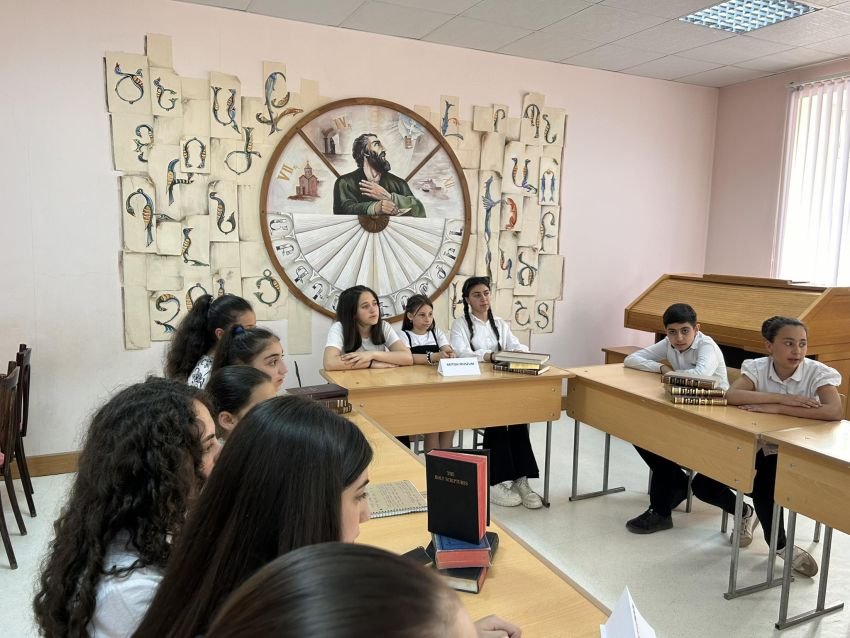
Role-playing games (situational dialogues) and various events organized in the target language (stage performances, contest games) increase interest in the respective language and develop students' correct communication skills.
During teaching, students will be able to appreciate the role and significance of the English language in the era of technological development and refine imperfections in English pronunciation.
FORMS OF INSTRUCTION
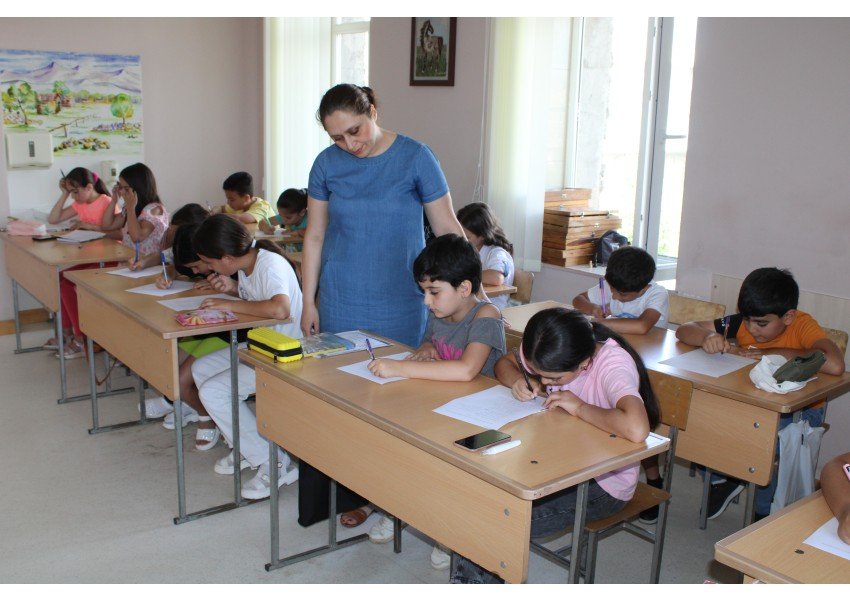
Instruction is carried out in group and individual formats through a combination of theoretical and practical classes. An individual approach is provided to each student, taking into account their abilities, preferences, age and perception characteristics, and level of competencies.
During the course of instruction, open classes, viewings of culturally themed films, events, and visits to English-speaking clubs and museums are held. The following methods are applied: audio-lingual, grammatical, translation (written, oral), symmetry, brainstorming, and dialogue. Role-play, group work, and for vocabulary learning—flashcard work, puzzles, and crosswords—are used to develop the word stock, resulting in the formation of linguistic literacy and multicultural communication skills. Communication with one another will contribute to language proficiency and the ability to express oneself freely. At the end of the year, an open class is held to present what has been learned and compare the differences between the first and last lessons.
EXPECTED OUTCOMES
Within the framework of the program, learners must:
-
Be able to communicate in English,
-
Be able to perform translations,
-
Master the characteristics of the language,
-
Know about the history of the English language and foreign culture,
-
Be able to read English literature in the original,
-
Be able to follow news feeds and events happening in the world in English.