 Русский
 Հայերեն
 Français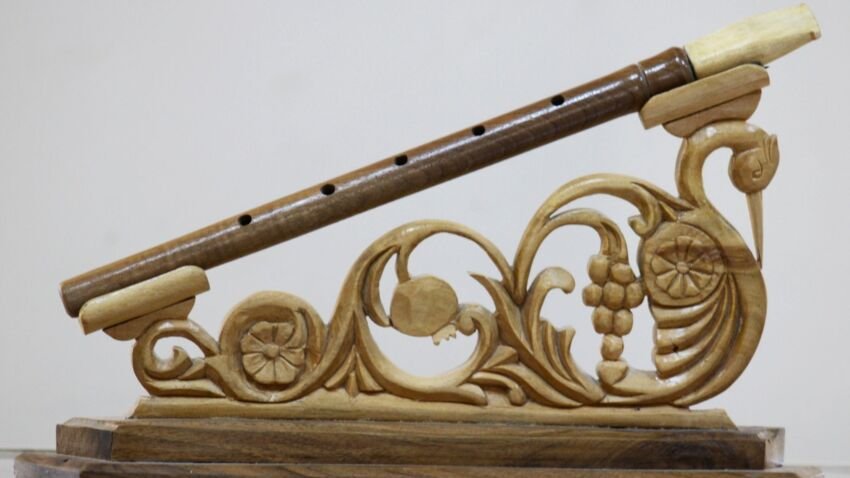
Woodworking Art
Age group of learners: 8 to 18 years old Number of learners: At least 7 Weekly class hours: 6 to 8 lessons per week Duration of the program: Three years
During the program, students learn basic geometric, trigonometric, planar, and spatial constructions; identify different types of wood; prepare and maintain their workspace; select appropriate carving tools according to different carving techniques; measure and mark carving patterns; draw and transfer markings; adapt decorative motifs to the dimensions of the prepared wooden surface and position them appropriately; perform various types of wood carving; carry out the final finishing of carved objects; and create and decorate decorative and applied art objects using ornamental carving.
Students also learn to observe occupational health and safety requirements, workplace safety procedures, and fire safety regulations while working in the workshop.
Throughout the program, students develop and strengthen the following knowledge and skills:
- Prepare and properly use work tools, equipment, and materials;
- Maintain the cleanliness and proper condition of tools and the workplace;
- Understand the stages of the woodcarving process;
- Select ornaments and decorative motifs and create sketches;
- Apply the professional requirements of artistic woodcarving when developing sketches;
- Create compositions, paying attention to the fundamental principles of composition;
- Recognize, appreciate, and understand beauty in the surrounding environment;
- Become familiar with materials science and the history of art;
- Master the fundamentals of woodcarving;
- Correct carving imperfections and perform final finishing, varnishing, and waxing;
- Carry out basic restoration and repair work;
- Observe occupational health, safety, and fire safety regulations.
FORMS OF INSTRUCTION
The program is implemented through a combination of theoretical and practical classes.
During the learning process, an individualized approach is provided to newly enrolled students, students who experience learning difficulties, and students with physical challenges.
Particular importance is given to educational and character-building activities, including reading, discussions, thematic film screenings, educational excursions, exhibitions, the transfer of professional knowledge, and other educational and cultural activities.
Since students may join the group at different times, each student receives an individualized and differentiated approach based on their abilities, interests, inclinations, talents, health condition, and length of attendance.
The teacher identifies each student's practical abilities, understands their creative ideas and potential, and provides opportunities for them to develop and apply their individual talents. The teacher also helps identify students' interests and inclinations toward other professions and areas of study.
Throughout the course, educational and developmental activities are conducted with students, including discussions, group conversations, preparation for events, participation in various competitions, and analysis and development of creative ideas.
PROGRAM OUTCOMES
Upon completion of the program, students should:
- Recognize the importance of extracurricular education in pre-vocational orientation and career development;
- Understand the characteristics of wooden object making and artistic woodcarving, as well as the organizational principles of a woodworking and carving workshop;
- Be able to create artistic works that may eventually develop into works of art;
- Understand the profession of a woodcarver and decorative-applied arts craftsman, as well as the organizational features of educational and professional workshops;
- Be able to select ornaments and decorative motifs, create sketches, transfer them onto prepared wooden surfaces, and perform the corresponding carving;
- Construct artistic compositions in accordance with the fundamental principles of composition;
- Be able to create wooden objects and perform geometric, contour, ornamental, relief, and high-relief carving;
- Be able to design and decorate jewelry boxes, candle holders, clocks, plates, panels, carved crosses, and other decorative and applied art objects;
- Perform restoration and repair of carved artistic wooden objects;
- Apply the knowledge, skills, and competencies acquired in artistic woodcarving and actively participate in competitions, exhibitions, and festivals.


